In the classroom: Stage
Teachers needed a way to monitor student goal progress in real time, without being tethered to their desks. With 5-7 daily goals per student, students also needed a way to see their own progress at a glance.
The existing teacher dashboard flagged missed goals in red, which the team at Primer wanted to keep away from students to avoid discouragement or peer pressure. The solution also had to fit existing classroom workflows, feel unobtrusive, and look distinct enough to impress a visiting parent or stakeholder.
Drawing inspiration from airport displays and group fitness screens, we landed on a class-block list view that grouped students by their current class, making it easy for teachers to see who was doing independent work and who was attending a virtual class. Screensaver-style backgrounds and a glassy tile design kept it visually engaging without being distracting, and teachers could swap in their own background if they preferred. The display also shifted for class transitions and morning goal reviews, with a subtle system for surfacing off-track goals, keeping any red out of sight.
The result gives teachers the freedom to move around the room while staying informed, without having to build a solution themselves.
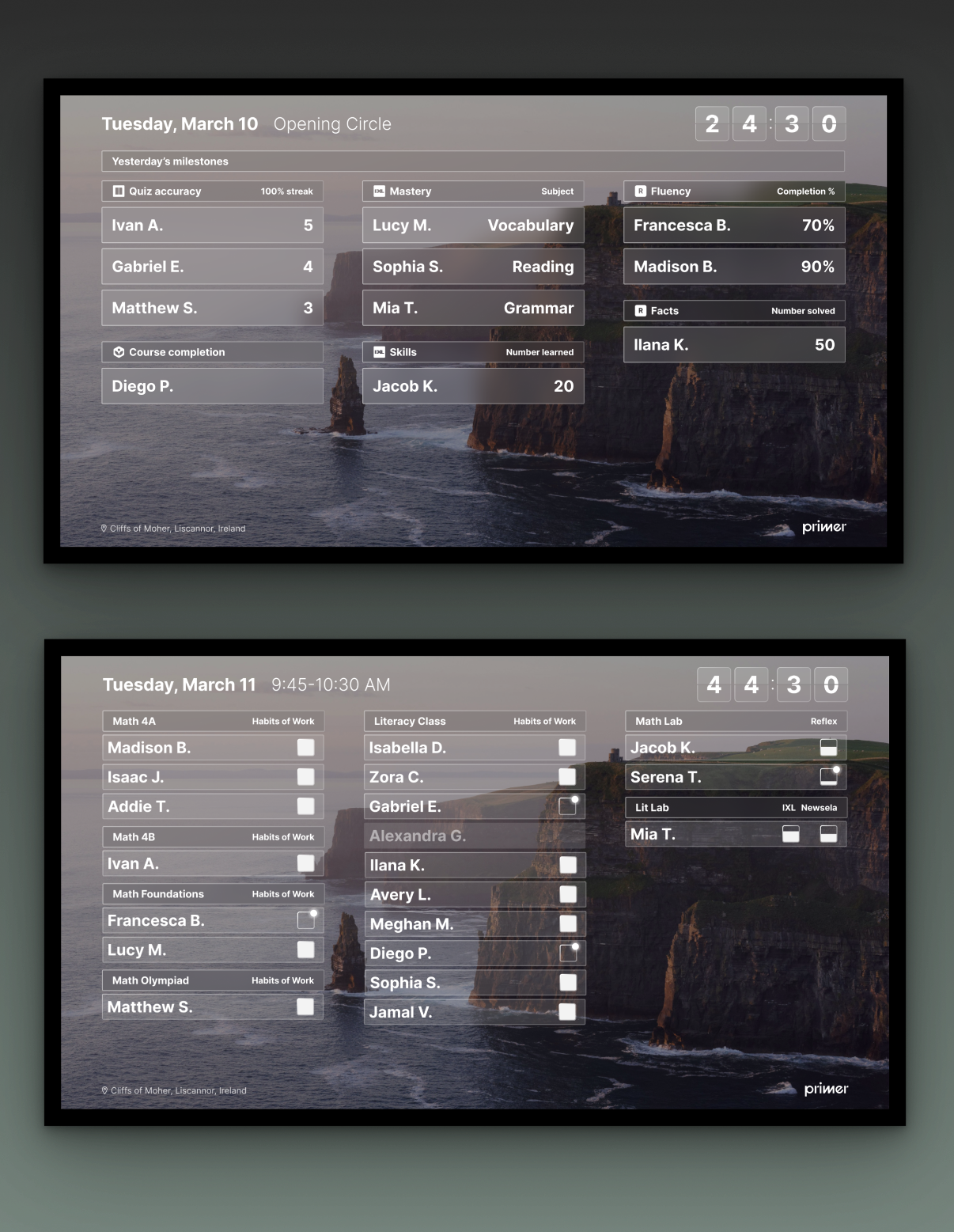
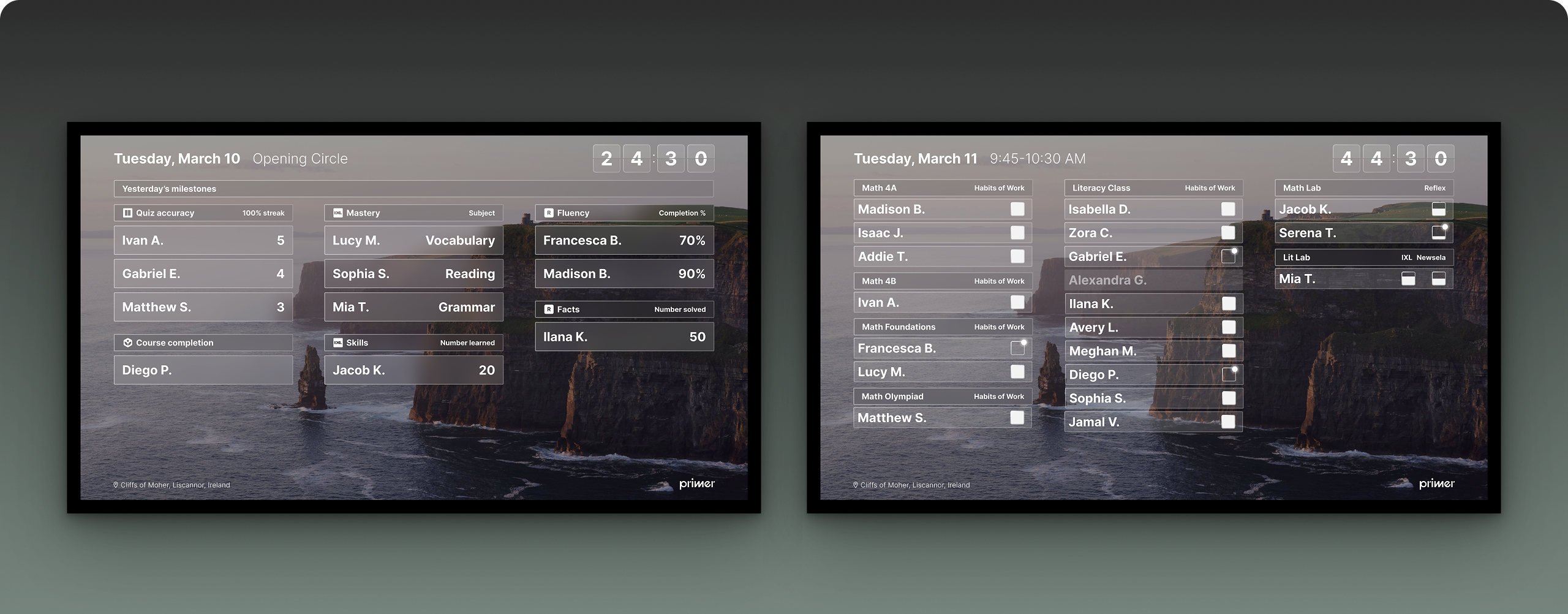
The screen can display different types of information depending on time of day. During class times, it shows each student, grouped by class, as well as their individual daily progress in each class.
Parent-facing mobile app
Parents needed a reliable way to stay connected to their child's school day, tracking progress, catching announcements, and reaching teachers without jumping between tools.
The existing web product had an inbox and activity feed, but it wasn't optimized for mobile and lacked push notifications. Communication was falling back on email or text, which meant parents were regularly missing messages and announcements simply because they weren't checking in often enough, and teachers were being bombarded with messages on their phones rather than through school platforms.
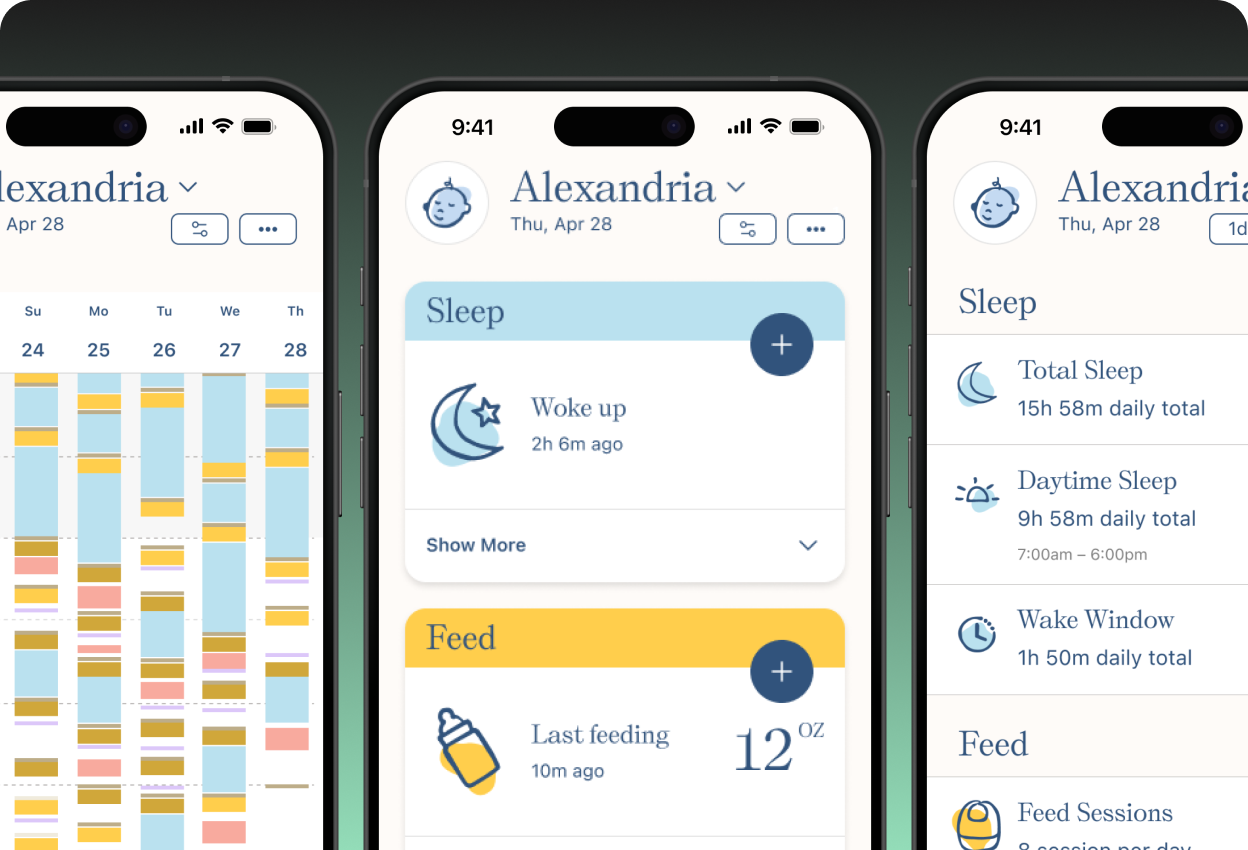
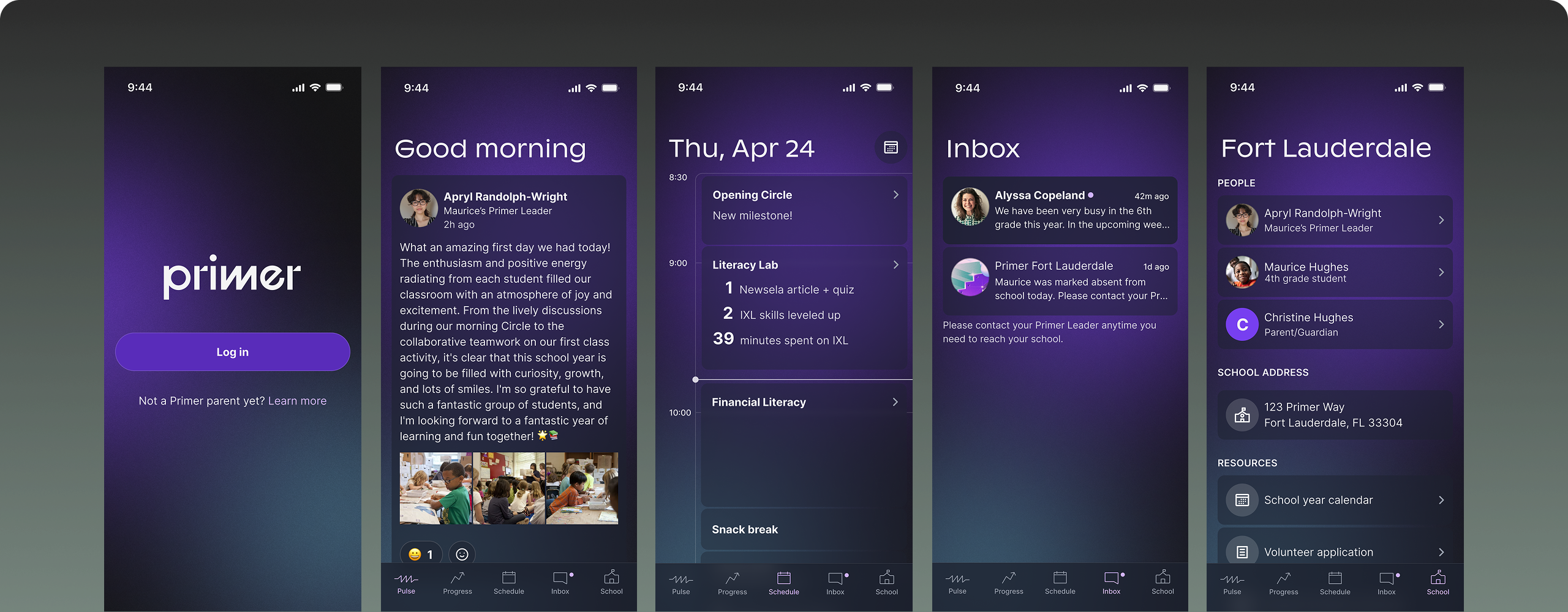
We designed a dedicated mobile app to bring everything into one place: announcements, messages, and school updates, with the push notifications needed to actually keep parents in the loop.
With the native app, parents could get a more detailed view into their child's day-to-day, and easily stay in contact with teachers.
Student rewards
Primer wanted a way to motivate students to reach their daily goals through some form of rewards or game-like engagement.
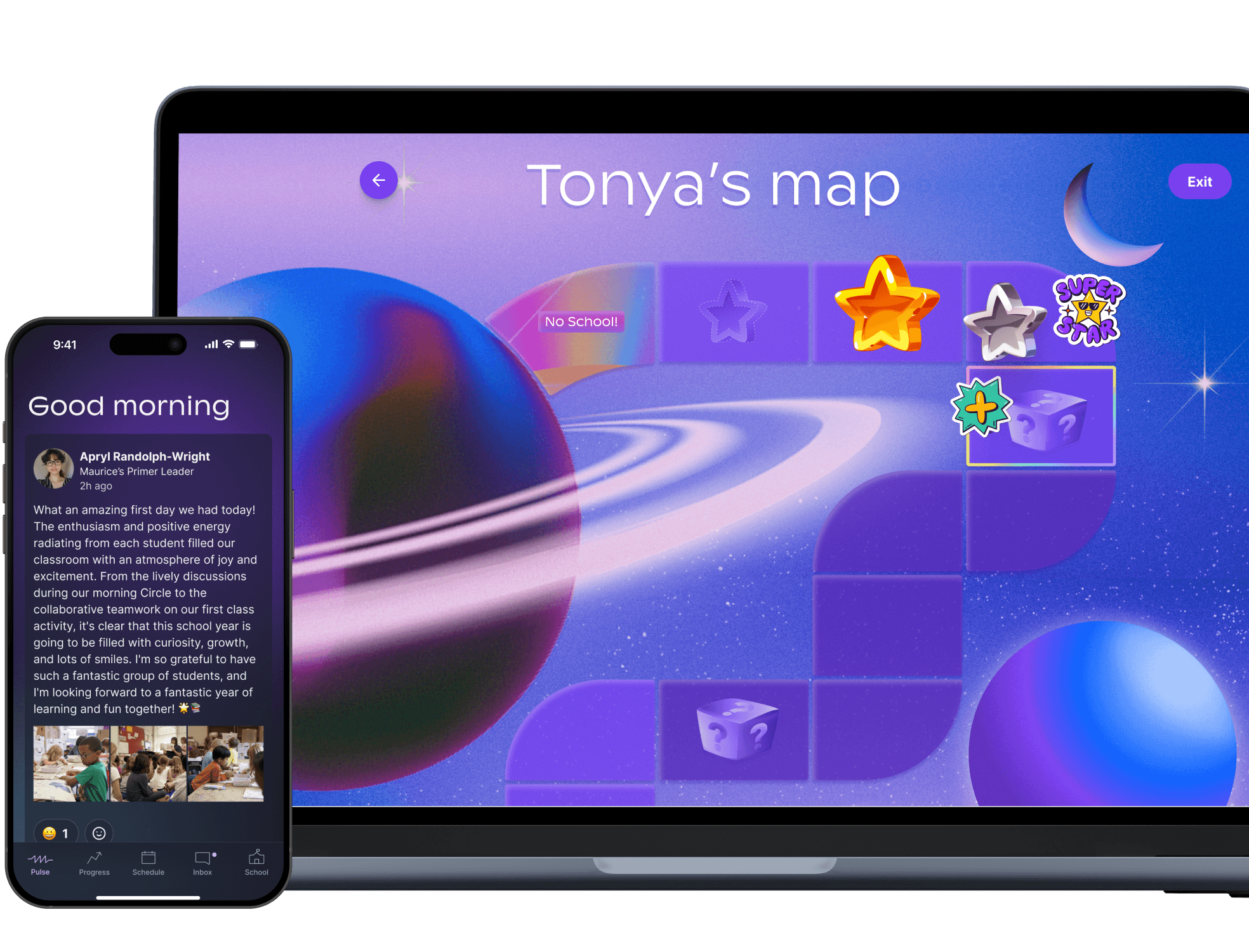
Our first approach was a Candy Land-inspired map of the school year. Students would move through it day by day, collecting stickers and rewards on each tile as they hit their goals. Each section of the map shifted visually with Primer's version of semesters, and the scenes were rooted in their previous brand's theme of exploration. I worked a lot on the visuals for this and built out each scene and tile.
Though we showed this map to some students for testing before we implemented it, and they really liked it, it didn't end up working out as the best solution for most classrooms. Teachers already had their own reward systems in place, and without it being built into their day-to-day routines, students stopped engaging with the map.
We went back to the drawing board, and the revised solution was a rewards store where students could shop for items using points they earned by meeting their goals. To bring it to life, I created illustrated storefronts for both the K-2 and 3-8 experiences, along with level badges that students could collect over time. The badges in particular became something students genuinely enjoyed collecting!
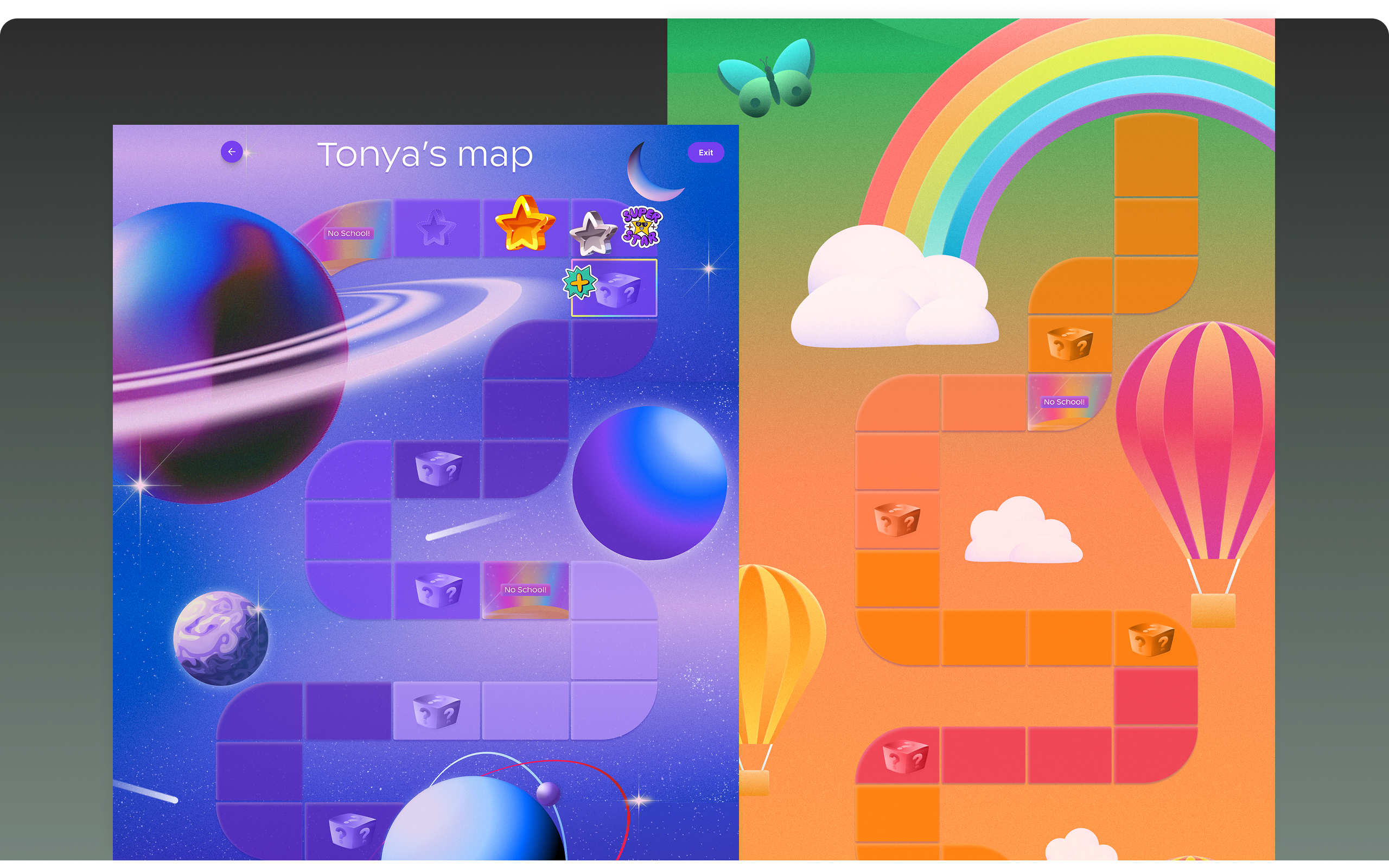
The map flowed through nature scenes, starting in space, and ending undersea. Students had a mystery prize to collect at the end of each week. Stars & stickers mapped their progress.
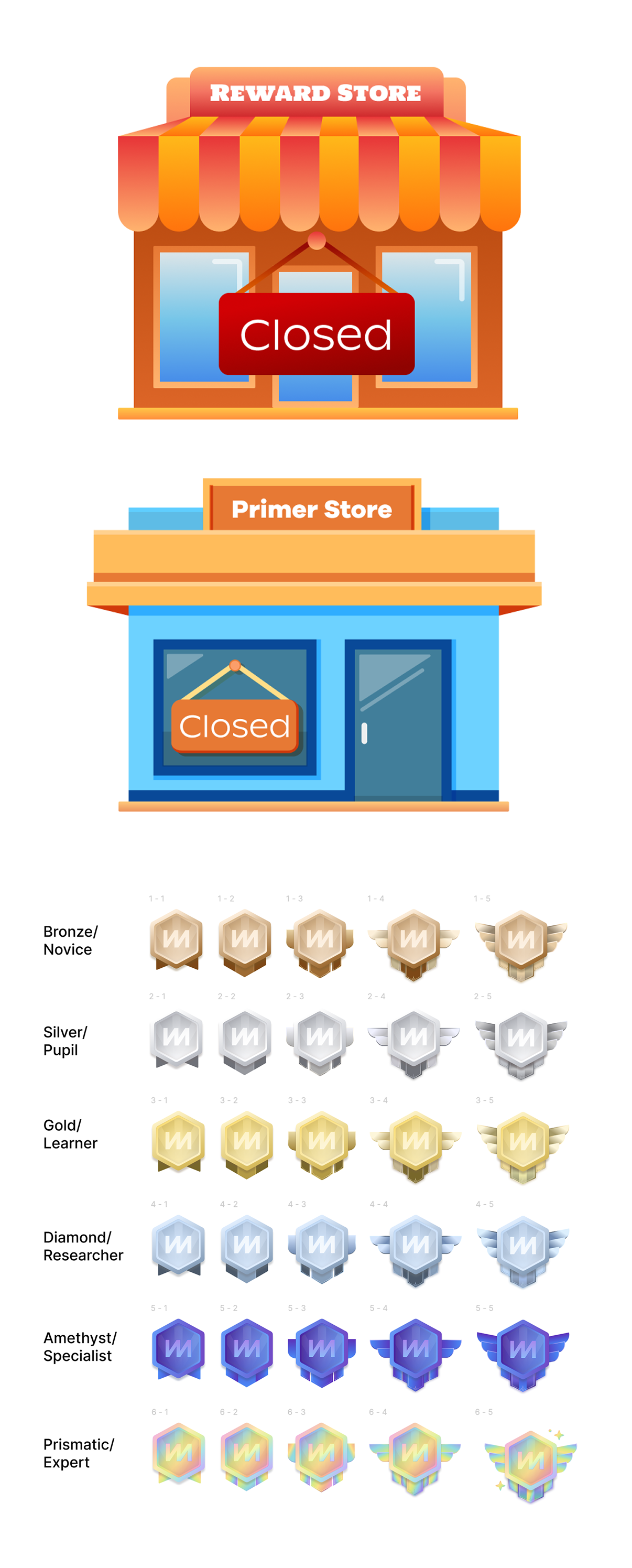
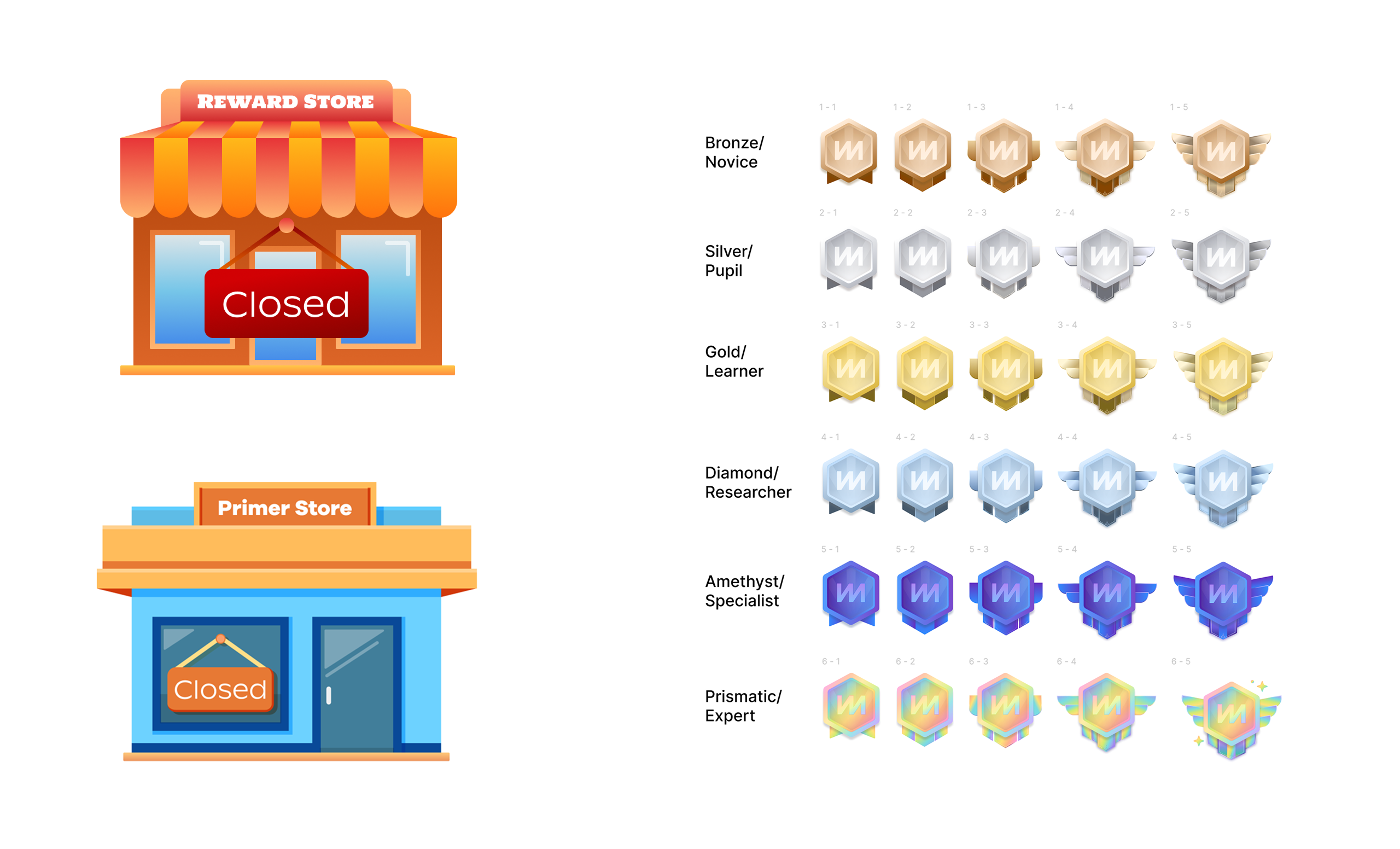
K-2 and 3-8 store closed illustrations, and the level up badges that students could collect by purchasing in the rewards store.